JLPT N5 Vocabulary List: How Many Words and the Fastest Way to Learn Them
TL;DR: The JLPT N5 requires roughly 800 vocabulary words. The fastest way to learn them is not rote drilling but visual association — attaching each word to a concrete image — combined with spaced repetition so you review each word right before you would forget it. Concrete nouns (food, places, objects, nature) make up most of the N5 list and are exactly the words a photo can teach in seconds. Just here for the list? Open the complete interactive N5 word list — all 718 words, filterable and printable — or start with the ~150 scene-grouped core words below.
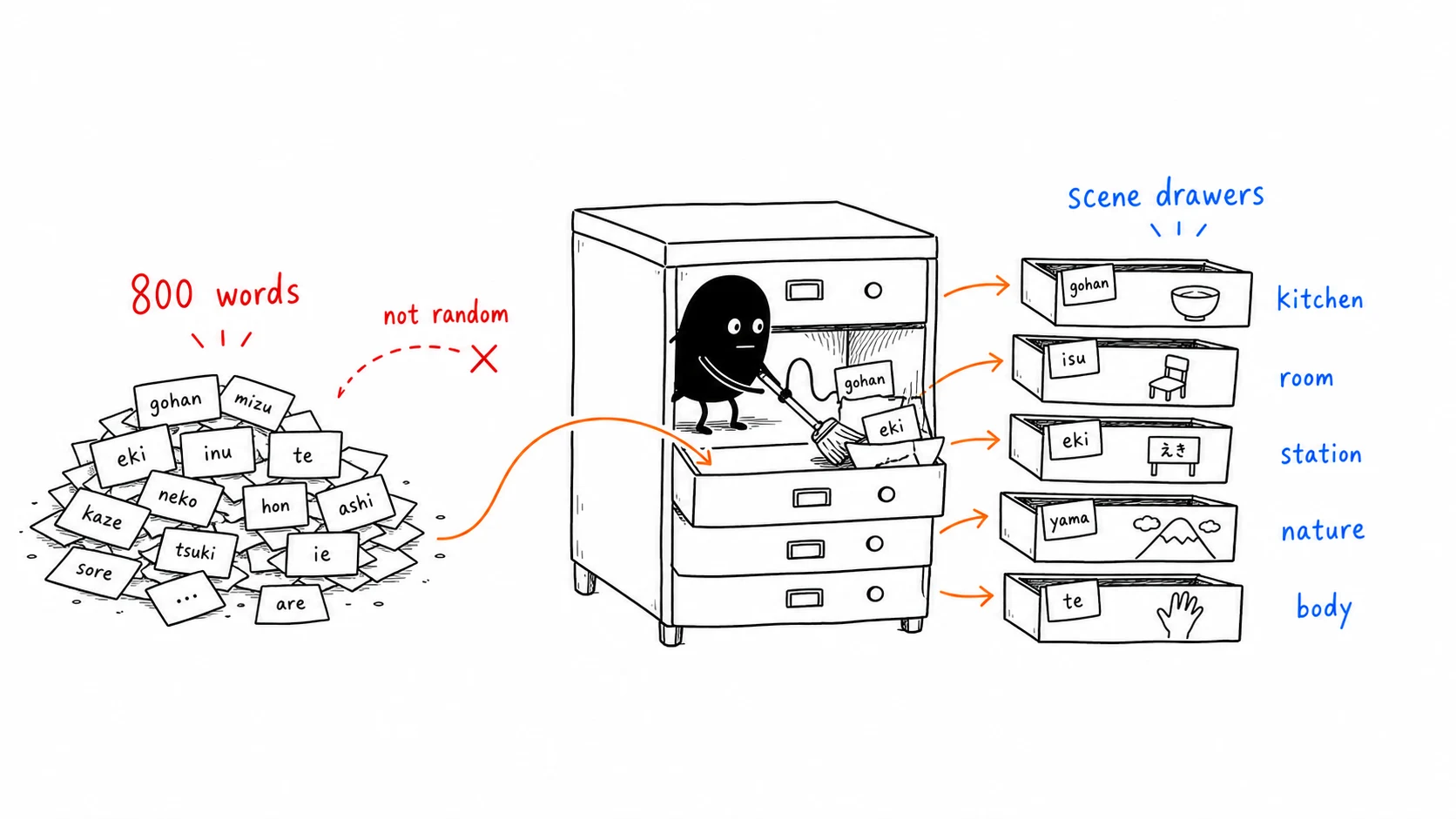
How many words do you actually need for N5?
The JLPT does not publish an official word list, but the widely used community consensus is consistent:
| Level | Vocabulary (approx.) | Kanji (approx.) | What it unlocks |
|---|---|---|---|
| N5 | 800 | 100 | Basic everyday phrases, self-introduction, simple questions |
| N4 | 1,500 | 300 | Everyday conversations, simple reading |
| N3 | 3,000 | 650 | Bridge level — news headlines, daily-life topics |
So passing N5 is mostly a vocabulary and recognition task. You don't need perfect grammar yet — you need to reliably recognize ~800 words and the ~100 kanji that appear most often. Once N5 feels comfortable, the workload roughly doubles — the JLPT N4 vocabulary list and study plan covers what the next 1,500 words look like.
Why rote memorization fails (and what beats it)
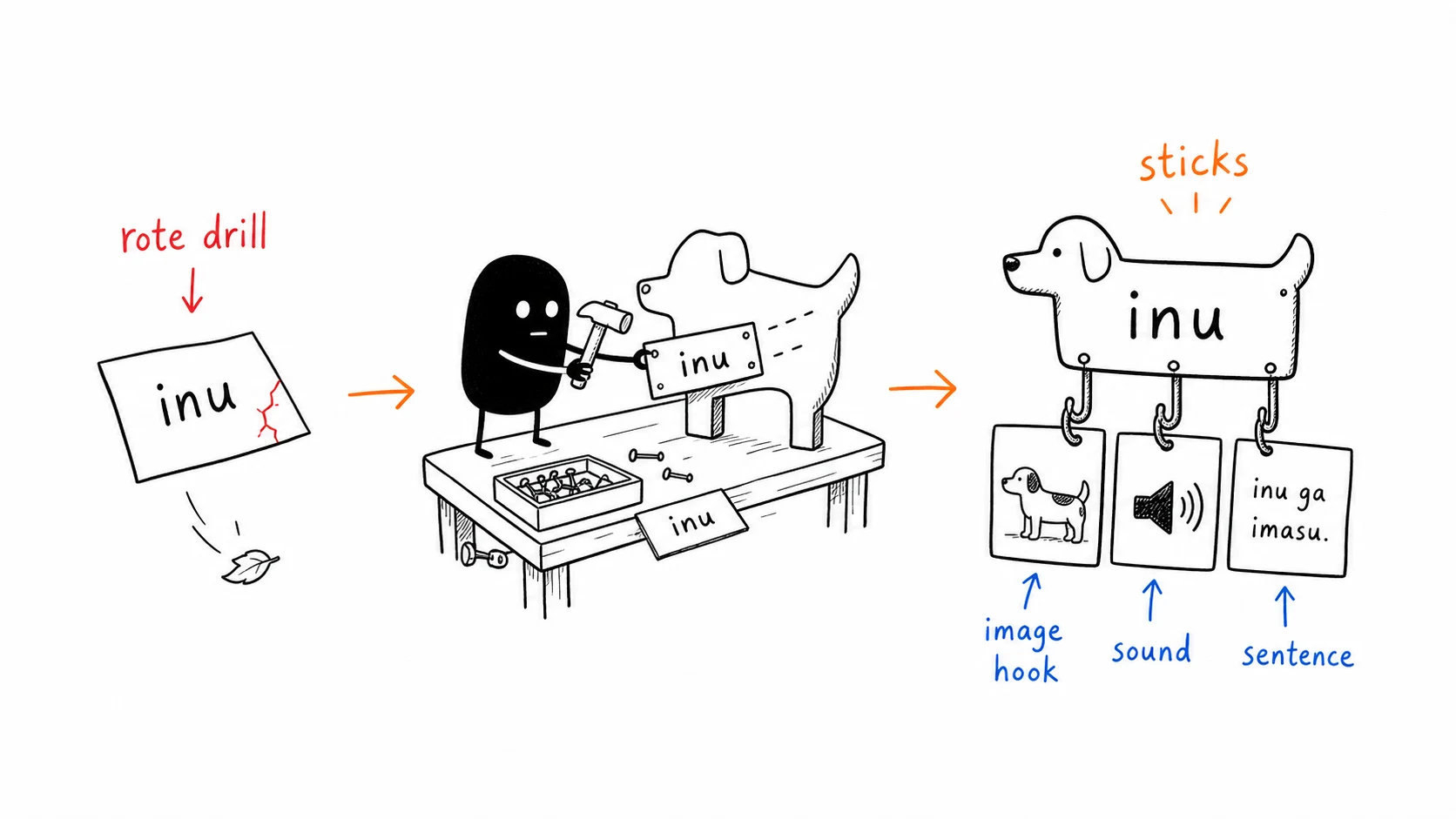
If you have ever written a word twenty times and forgotten it the next morning, the problem isn't you — it's the method. Two well-documented effects explain why:
- The Picture Superiority Effect — people remember images far better than words. In classic studies, picture recall outperformed word recall by a wide margin. A word tied to a vivid image is simply stickier than a word on a list.
- The Ebbinghaus forgetting curve (1885) — without review, you lose most new information within days. The fix isn't more review, it's timed review: see the word again right before you'd forget it, and each repetition flattens the curve.
Putting it all together, the most effective N5 strategy is: anchor each word to a visual image, then let spaced repetition handle the review schedule. For the science behind the schedule, see our guide to why spaced repetition beats traditional flashcards.
The N5 vocabulary, grouped by how you encounter it
Most N5 words are concrete and tied to daily life. Grouping them by real-world scene makes them far easier to retain than an alphabetical list:
| Category | Examples (romaji) | Why it sticks |
|---|---|---|
| Food & drink | gohan, mizu, sakana, niku, tamago | You see them at every meal |
| Home & objects | isu, tsukue, mado, denwa, kagi | You're surrounded by them |
| Places | eki, ginkou, byouin, gakkou, mise | You navigate them weekly |
| Nature & weather | ame, yuki, kawa, yama, sora | Visual and concrete |
| People & body | hito, tomodachi, atama, te, me | High-frequency, easy to picture |
| Time & numbers | kyou, ashita, ima, getsuyoubi | Abstract — pair with routines |
Notice the pattern: the first five categories are visually concrete and easy to photograph. A photo of your lunch can teach gohan, sakana, and tamago at once. Abstract words (time, conjunctions, grammar particles) are the minority — those are the ones to drill with example sentences and spaced repetition.
Below are the core words for each scene — about 150 in total, the high-frequency backbone of the ~800-word N5 list. Use the table of contents to jump between categories.
Want to work through the words as a checklist? Open the free interactive JLPT N5 vocabulary tool — all 718 N5 words, filterable by topic or part of speech, with saved progress and a printable PDF.
Food & drink
| Word | Kana | Romaji | English |
|---|---|---|---|
| ご飯 | ごはん | gohan | rice; meal |
| 水 | みず | mizu | water |
| お茶 | おちゃ | ocha | tea |
| 牛乳 | ぎゅうにゅう | gyuunyuu | milk |
| コーヒー | コーヒー | koohii | coffee |
| パン | パン | pan | bread |
| 卵 | たまご | tamago | egg |
| 魚 | さかな | sakana | fish |
| 肉 | にく | niku | meat |
| 牛肉 | ぎゅうにく | gyuuniku | beef |
| 豚肉 | ぶたにく | butaniku | pork |
| 鶏肉 | とりにく | toriniku | chicken |
| 野菜 | やさい | yasai | vegetables |
| 果物 | くだもの | kudamono | fruit |
| りんご | りんご | ringo | apple |
| バナナ | バナナ | banana | banana |
| ジュース | ジュース | juusu | juice |
| お酒 | おさけ | osake | alcohol; sake |
| 塩 | しお | shio | salt |
| 砂糖 | さとう | satou | sugar |
| お弁当 | おべんとう | obentou | boxed lunch |
| 朝ご飯 | あさごはん | asagohan | breakfast |
| 昼ご飯 | ひるごはん | hirugohan | lunch |
| 晩ご飯 | ばんごはん | bangohan | dinner |
| お菓子 | おかし | okashi | sweets; snacks |
Your next meal contains half a dozen of these. Photograph your plate once, and gohan, tamago, and yasai become flashcards in about 5 seconds featuring the exact meal in front of you. Want the tableware, verbs, and adjectives that go with them? See the food & home scene deep-dive.
Home & everyday objects
| Word | Kana | Romaji | English |
|---|---|---|---|
| 家 | いえ | ie | house; home |
| 部屋 | へや | heya | room |
| ドア | ドア | doa | door |
| 窓 | まど | mado | window |
| 机 | つくえ | tsukue | desk |
| 椅子 | いす | isu | chair |
| ベッド | ベッド | beddo | bed |
| 本 | ほん | hon | book |
| ペン | ペン | pen | pen |
| 鉛筆 | えんぴつ | enpitsu | pencil |
| 紙 | かみ | kami | paper |
| 鞄 | かばん | kaban | bag |
| 傘 | かさ | kasa | umbrella |
| 時計 | とけい | tokei | clock; watch |
| 電話 | でんわ | denwa | telephone |
| テレビ | テレビ | terebi | television |
| カメラ | カメラ | kamera | camera |
| 鍵 | かぎ | kagi | key |
| 財布 | さいふ | saifu | wallet |
| 眼鏡 | めがね | megane | glasses |
| 服 | ふく | fuku | clothes |
| 靴 | くつ | kutsu | shoes |
| 帽子 | ぼうし | boushi | hat |
| テーブル | テーブル | teeburu | table |
| 冷蔵庫 | れいぞうこ | reizouko | refrigerator |
Everything on this list is within arm's reach right now. One photo of your desk covers tsukue, hon, pen, and tokei in a single shot.
Places
| Word | Kana | Romaji | English |
|---|---|---|---|
| 駅 | えき | eki | station |
| 銀行 | ぎんこう | ginkou | bank |
| 郵便局 | ゆうびんきょく | yuubinkyoku | post office |
| 病院 | びょういん | byouin | hospital |
| 学校 | がっこう | gakkou | school |
| 大学 | だいがく | daigaku | university |
| 図書館 | としょかん | toshokan | library |
| 店 | みせ | mise | shop |
| スーパー | スーパー | suupaa | supermarket |
| デパート | デパート | depaato | department store |
| レストラン | レストラン | resutoran | restaurant |
| 喫茶店 | きっさてん | kissaten | coffee shop |
| 公園 | こうえん | kouen | park |
| 映画館 | えいがかん | eigakan | cinema |
| ホテル | ホテル | hoteru | hotel |
| 町 | まち | machi | town |
| 道 | みち | michi | street; road |
| 会社 | かいしゃ | kaisha | company; office |
| 交番 | こうばん | kouban | police box |
| 空港 | くうこう | kuukou | airport |
| 本屋 | ほんや | honya | bookstore |
| 八百屋 | やおや | yaoya | greengrocer |
| 教室 | きょうしつ | kyoushitsu | classroom |
| 庭 | にわ | niwa | garden |
| トイレ | トイレ | toire | toilet; restroom |
You pass most of these places every day on your commute. A photo of the station sign makes eki impossible to forget — it comes with the platform you actually stand on.
Nature & weather
| Word | Kana | Romaji | English |
|---|---|---|---|
| 天気 | てんき | tenki | weather |
| 雨 | あめ | ame | rain |
| 雪 | ゆき | yuki | snow |
| 風 | かぜ | kaze | wind |
| 晴れ | はれ | hare | sunny weather |
| 曇り | くもり | kumori | cloudy weather |
| 空 | そら | sora | sky |
| 山 | やま | yama | mountain |
| 川 | かわ | kawa | river |
| 海 | うみ | umi | sea |
| 木 | き | ki | tree |
| 花 | はな | hana | flower |
| 犬 | いぬ | inu | dog |
| 猫 | ねこ | neko | cat |
| 鳥 | とり | tori | bird |
| 春 | はる | haru | spring |
| 夏 | なつ | natsu | summer |
| 秋 | あき | aki | autumn |
| 冬 | ふゆ | fuyu | winter |
| 暑い | あつい | atsui | hot (weather) |
| 寒い | さむい | samui | cold |
| 涼しい | すずしい | suzushii | cool |
The view out your window is a vocabulary card waiting to happen — sora, ki, and today's tenki in one frame.
People & body
| Word | Kana | Romaji | English |
|---|---|---|---|
| 人 | ひと | hito | person |
| 男の人 | おとこのひと | otoko no hito | man |
| 女の人 | おんなのひと | onna no hito | woman |
| 子供 | こども | kodomo | child |
| 友達 | ともだち | tomodachi | friend |
| 家族 | かぞく | kazoku | family |
| お父さん | おとうさん | otousan | father |
| お母さん | おかあさん | okaasan | mother |
| お兄さん | おにいさん | oniisan | older brother |
| お姉さん | おねえさん | oneesan | older sister |
| 弟 | おとうと | otouto | younger brother |
| 妹 | いもうと | imouto | younger sister |
| 先生 | せんせい | sensei | teacher |
| 学生 | がくせい | gakusei | student |
| 医者 | いしゃ | isha | doctor |
| 頭 | あたま | atama | head |
| 顔 | かお | kao | face |
| 目 | め | me | eye |
| 耳 | みみ | mimi | ear |
| 鼻 | はな | hana | nose |
| 口 | くち | kuchi | mouth |
| 歯 | は | ha | tooth |
| 手 | て | te | hand |
| 足 | あし | ashi | leg; foot |
| お腹 | おなか | onaka | stomach |
| 体 | からだ | karada | body |
Note the pair: 鼻 (hana, nose) and 花 (hana, flower) sound identical — the kanji and the visual image are what keep them distinct in your memory.
Time & numbers
| Word | Kana | Romaji | English |
|---|---|---|---|
| 今日 | きょう | kyou | today |
| 明日 | あした | ashita | tomorrow |
| 昨日 | きのう | kinou | yesterday |
| 今 | いま | ima | now |
| 朝 | あさ | asa | morning |
| 昼 | ひる | hiru | noon; daytime |
| 夜 | よる | yoru | night |
| 午前 | ごぜん | gozen | a.m. |
| 午後 | ごご | gogo | p.m. |
| 時間 | じかん | jikan | time; hour |
| 分 | ふん | fun | minute |
| 半 | はん | han | half past |
| 毎日 | まいにち | mainichi | every day |
| 毎朝 | まいあさ | maiasa | every morning |
| 毎晩 | まいばん | maiban | every night |
| 今週 | こんしゅう | konshuu | this week |
| 先週 | せんしゅう | senshuu | last week |
| 来週 | らいしゅう | raishuu | next week |
| 今月 | こんげつ | kongetsu | this month |
| 来月 | らいげつ | raigetsu | next month |
| 今年 | ことし | kotoshi | this year |
| 去年 | きょねん | kyonen | last year |
| 来年 | らいねん | rainen | next year |
| 月曜日 | げつようび | getsuyoubi | Monday |
| 日曜日 | にちようび | nichiyoubi | Sunday |
Learn all seven weekdays as a set (getsu–ka–sui–moku–kin–do–nichi + ようび), and numbers 1–10 (ichi, ni, san, yon, go, roku, nana, hachi, kyuu, juu) before drilling times and dates. These represent the more abstract minority of N5 vocabulary — pair them with your daily habits (like "毎朝 コーヒー") rather than standalone photos.
Take the list with you: the 120-word starter pack
If you want the core of this page in one file, grab the starter pack: 120 words — twenty per category above, weighted toward concrete, photographable nouns — with kanji, kana, romaji, English, and category columns.
Download the N5 starter pack (CSV) — it imports into Anki, Quizlet, or any spreadsheet.
A CSV still leaves you doing the hard part by hand: finding images, adding audio, and scheduling reviews. The faster route is to skip the file entirely — photograph your meal, your desk, your station, and let KaChiKa JA build the cards from your own scenes, photo attached, reviews scheduled.
A realistic 8-week N5 study plan
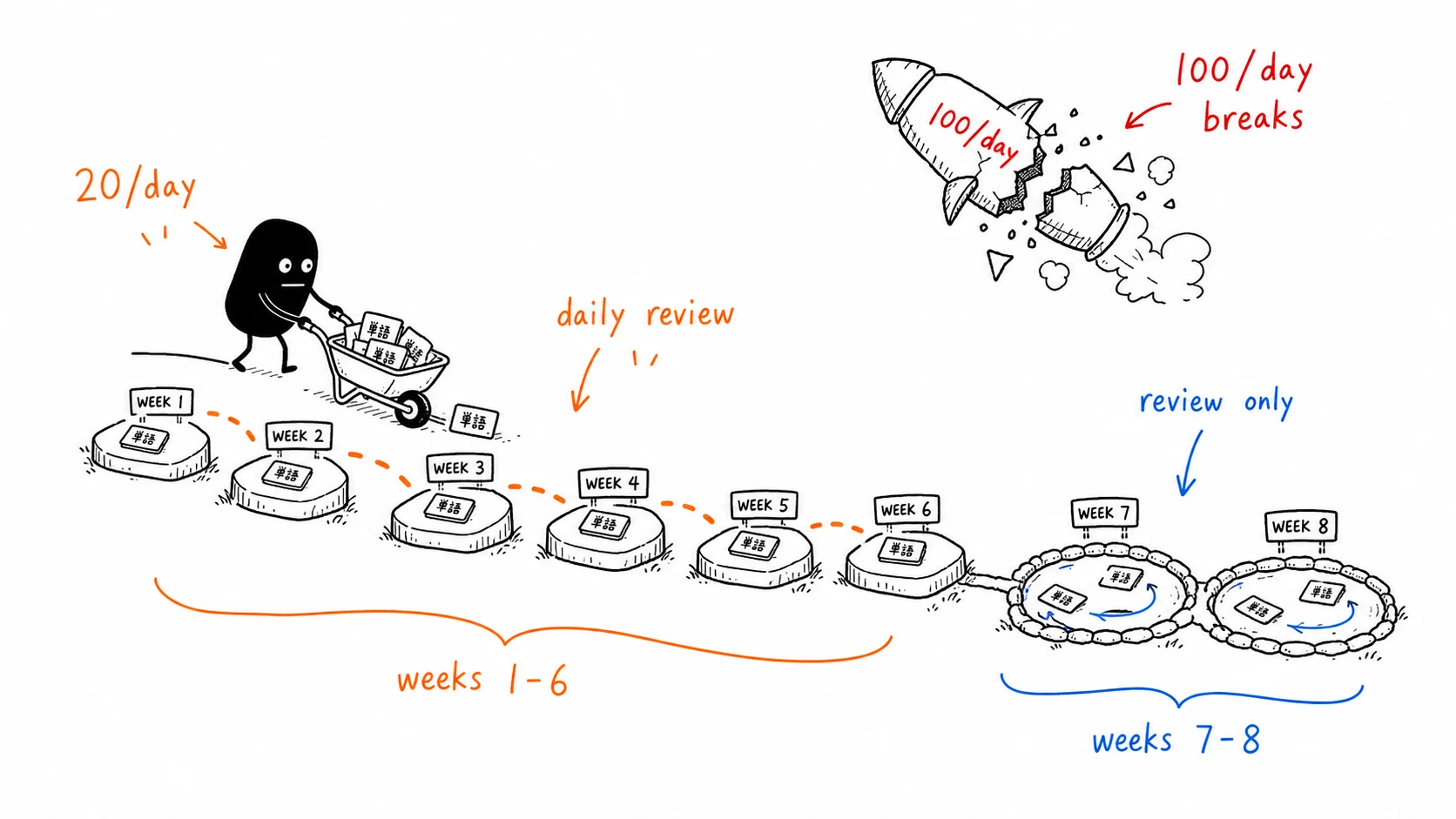
You do not need to grind 100 words a day. That pace collapses within weeks as review load explodes. Sustainable beats heroic:
- Weeks 1–6: ~20 new words per day, drawn from one scene at a time (your kitchen, your commute, your desk). ~120 words/week.
- Daily: 10 minutes of spaced-repetition review on whatever is due. This is the part that actually moves words into long-term memory.
- Weeks 7–8: stop adding new words. Review only, plus N5-level listening (anime, podcasts) and the ~100 N5 kanji — they stick far faster as visual mnemonics than as stroke drills.
The single biggest mistake is making "perfect" cards. A 30-second photo card reviewed 20 times beats a 10-minute handcrafted card you only look at once.
Prefer a fixed paper plan? The free review schedule generator turns a start date and group count into a day-by-day timetable you can export to your calendar.
Skip the spreadsheet stage entirely: photograph one scene a day — kitchen, commute, desk — and the ~20 words in it become review-ready cards in about 5 seconds. Download KaChiKa JA free and start with today's lunch.
Turning the plan into something you'll actually do
This is where a photo-to-card tool earns its keep. Instead of typing lists, point your camera at a real scene — a meal, the station, your room — and the vocabulary in the shot becomes ready-made visual cards, already in a spaced-repetition queue. The word is the image.
If you're coming from Anki, the trade-off is familiar: see how KaChiKa compares to Anki for the manual-deck vs. photo-card difference, how to choose an N5 Anki deck if you want a pre-made one, or the roundup of the best free Anki alternatives for 2026 for the wider field.
Start your N5 list today: snap a photo of what's around you and turn it into flashcards — download KaChiKa JA free.
FAQ
How many vocabulary words do I need for JLPT N5?
Around 800 words and about 100 kanji. There is no official JLPT word list, but this is the widely accepted community consensus. Passing N5 is primarily about recognition, so building a strong vocabulary foundation matters far more than mastering complex grammar.
What is the fastest way to memorize JLPT N5 vocabulary?
Pair each word with a concrete image and review it on a spaced-repetition schedule so you see it right before forgetting. Concrete nouns — food, places, objects, nature — make up most of the N5 list and are ideal for visual learning.
How long does it take to pass JLPT N5?
At a sustainable pace of about 20 new words a day plus 10 minutes of daily review, most learners cover the N5 vocabulary in roughly 6 to 8 weeks. Cramming 100 words a day is not sustainable because the daily review load grows too fast.
Do I need to learn kanji for JLPT N5?
Yes, about 100 of the most common kanji appear on the N5 exam. Learn them alongside vocabulary rather than separately, and use visual mnemonics — kanji are pictographic in origin, which makes image-based memory especially effective.
Is there a free JLPT N5 vocabulary list I can download?
Yes. This page lists about 150 core N5 words grouped by scene — food, home, places, nature, people, time — each with kana, romaji, and English. You can also download the free 120-word starter pack as a CSV and import it into any flashcard app, or photograph the scenes around you and let KaChiKa JA build the cards.